
If we were to ask people what Fatima is about, almost everyone would answer without hesitation: "The apparitions of Our Lady." And they would be right. But not entirely. Because Fatima did not begin with Mary. That may sound surprising, yet if we read the story carefully, we discover that before the Blessed Virgin appeared to the three shepherd children in May 1917, God first sent an Angel to prepare them. Not once, but three times. That was no coincidence. God never acts by chance. Whenever He wishes to bestow a great grace, He first prepares the human heart to receive it. And that is why Fatima begins, not with Mary, but with the Angel. What is even more striking is the lesson the Angel teaches. He does not begin by speaking about the future. He says nothing about wars. He reveals no secrets. He gives no prophecies. Instead... he kneels. In fact, Sister Lúcia tells us that he prostrated himself with his forehead touching the ground and began to adore God. The first lesson of Fatima is therefore not prophecy. It is adoration. It is as though God were saying to the whole world: "Before you seek to understand My plans, first learn to kneel before My Presence."
Fatima begins with the Angel of Peace who calls to Prayer through reverence to God
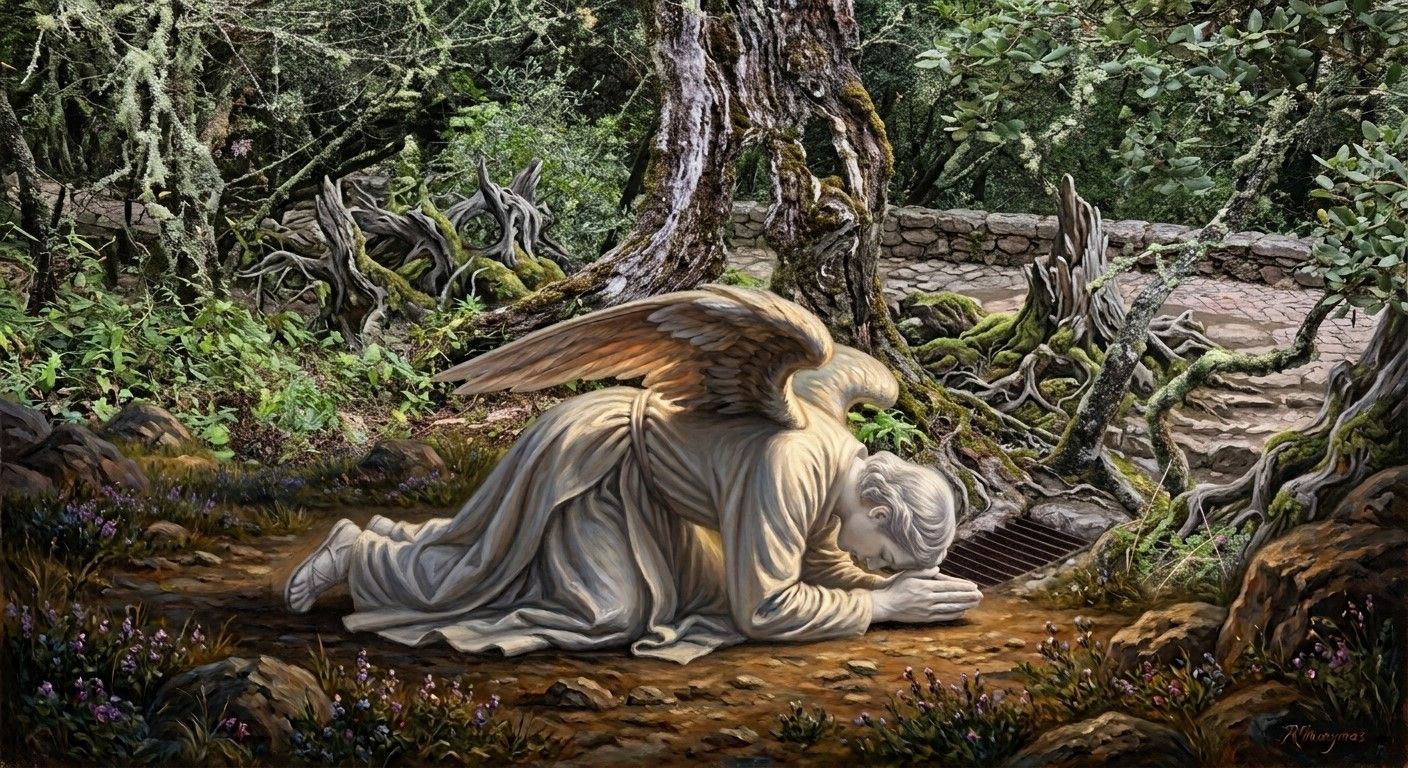
The Angel of Peace
There is another detail that is deeply significant. When the Angel first appears, he introduces himself with these words: "Do not be afraid. I am the Angel of Peace." Only later does he add: "I am the Angel of Portugal." That order is not accidental. He reveals his mission before revealing his identity. He is, above all, the Angel of Peace. But what kind of peace?
Certainly not the peace that the world speaks about. Not peace negotiated around conference tables. Not peace secured by political agreements. Not peace maintained through military balance. The Angel of Peace immediately leads the children to adore God. It is as though Heaven were teaching us that peace begins on our knees before God. How relevant that message is today. Never has our world spoken so much about peace. We organise international summits. We negotiate treaties. We invest enormous resources in security. And yet hearts remain restless. Why? Because every war begins long before the first weapon is raised. It begins in the human heart. Pride gives birth to conflict. Selfishness breeds division. Sin destroys communion. Unless the human heart is reconciled with God, it will never truly be reconciled with another human being. That is why the Angel does not first teach the children how to change the world. He teaches them how to adore. Because the person who knows how to kneel before God will no longer feel the need to worship himself. And that is where peace begins. St Augustine expressed it with unforgettable words: "Our hearts are restless until they rest in You." Those words could almost serve as the motto of Fatima.
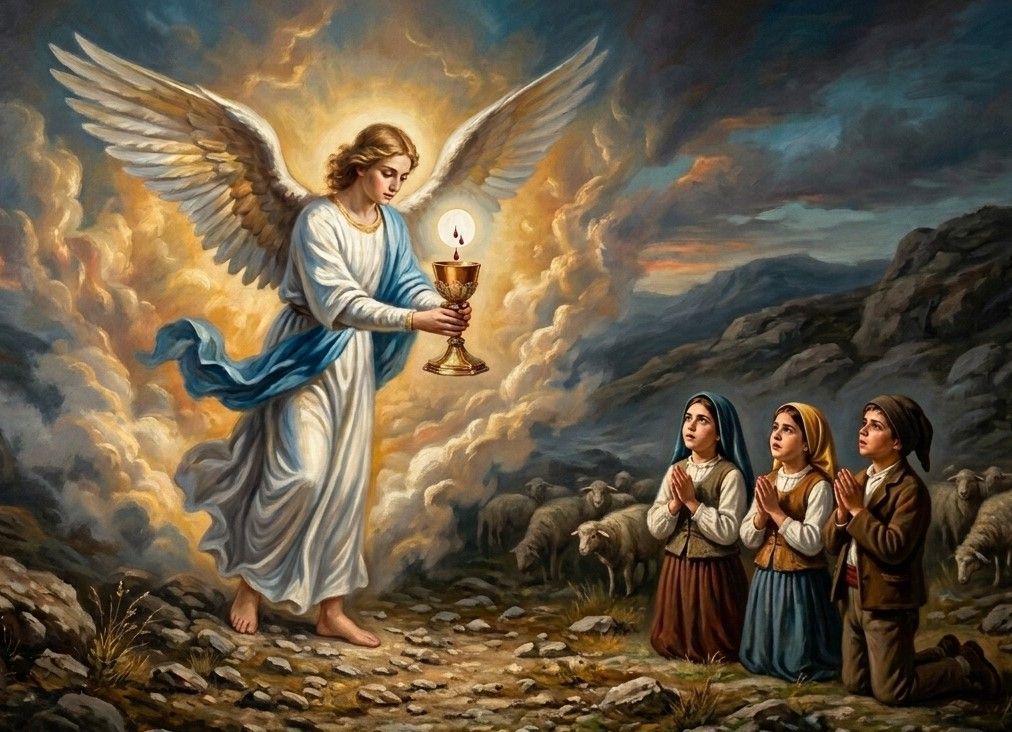
Fatima Leads Us to the Eucharist
During the third apparition, the Angel appeared holding a Chalice above which a Host was suspended. Drops of Blood fell from the Host into the Chalice. It is surely one of the most beautiful Eucharistic images in the entire history of the Church. Once again, the Angel prostrated himself before the Blessed Sacrament and taught the children to pray: "Most Holy Trinity, Father, Son and Holy Spirit, I adore You profoundly..." Notice the order. Before the children ever heard about the Immaculate Heart of Mary... they first learned how to adore God. That is no coincidence. Mary never keeps anyone for herself. Her whole life points towards her Son. Her words at Cana remain the programme of every authentic Marian devotion: "Do whatever He tells you." That is precisely what she does at Fatima. She leads souls to Christ. For this reason, the first Holy Communion received by the children was given not by a priest, but by the Angel himself. In silence. In adoration. As though God wished to proclaim to the whole world: The greatest treasure of the Church is not even the most extraordinary private revelation. The greatest treasure of the Church is the Eucharist. Private revelations always lead us to the Eucharist. Never the other way round.
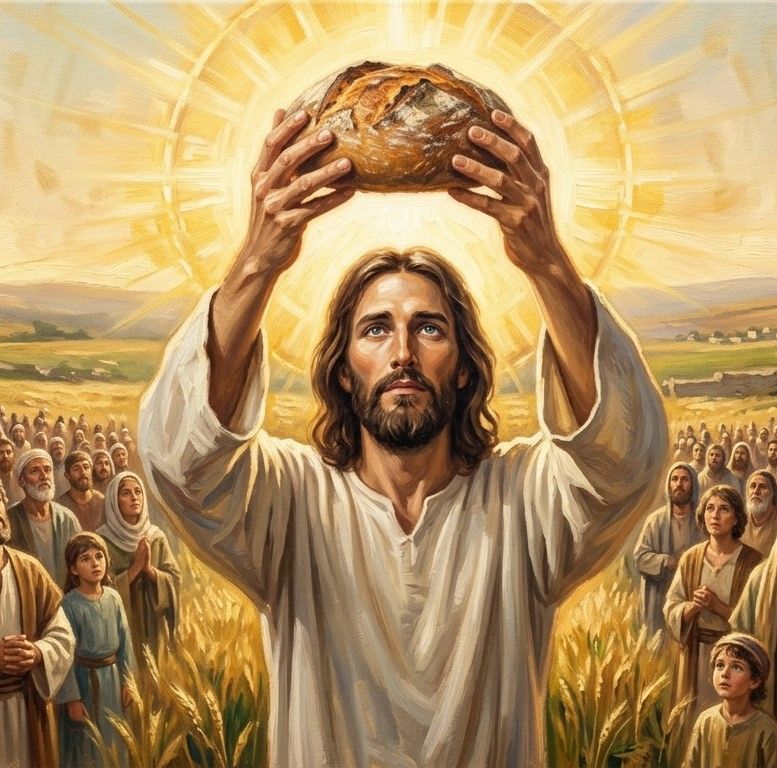
The Gospel of the Multiplication of Bread
The Gospel of the multiplication of Bread fits so perfectly into the message of the First Saturday, even if at first sight it seems simply to be a miracle of compassion. But from the earliest centuries the Fathers of the Church recognised something much deeper. This miracle is a prefiguration of the Eucharist. Look carefully at what Jesus does. He takes the bread. He raises His eyes to heaven. He pronounces the blessing. He breaks the bread. He gives it to His disciples. And the disciples distribute it to the people. Does that sound familiar? It is almost a rehearsal of the Last Supper. The multiplication of the loaves therefore points beyond itself. It leads us towards the Upper Room. Towards those astonishing words: "This is My Body." Yet there is another detail in today's Gospel that touches me deeply. The Apostles look at the crowd and all they see is a problem. Five thousand hungry people. A deserted place. Evening is approaching. No food. Their solution seems perfectly reasonable. "Send the crowds away, so that they may go into the villages and buy food for themselves." That is the logic of the world. Everyone must look after themselves. Everyone must satisfy their own hunger. Everyone must find their own security. Everyone must purchase what they need. But Jesus answers with words that remain the programme of the Church in every generation: "There is no need for them to go away." What beautiful words. There is no need to leave. Remain with Me. Because anyone who walks away from Christ will remain hungry, no matter how much this world offers. And then Jesus says something even more astonishing: "You give them something to eat." The disciples look at what they possess. Five loaves. Two fish. So little. And yet that is always where God's miracles begin. God never asks how much we possess. He asks whether we are willing to place into His hands what we have. And then the miracle happens... The Greatest Multiplication of Bread in History. The miracle takes place. Five thousand people are fed. But, astonishingly, this is not the greatest miracle. The greatest miracle was yet to come. For at every Holy Mass, Christ performs a miracle infinitely greater than the multiplication of the loaves. On that hillside He fed five thousand people with five loaves. Upon our altars He feeds millions with one Bread. Not for one evening. Not for one generation. But until the end of time. This is the greatest multiplication of Bread in history. One Lord. One Eucharist. One Sacrifice. Present upon every Catholic altar throughout the world. How often we become so accustomed to this mystery that we forget how extraordinary it truly is. Imagine if Christ had remained visibly on earth in only one place. Millions would travel across continents simply to see Him for a few moments. Yet in His infinite love He chose something even greater. He remains sacramentally present wherever the Holy Sacrifice of the Mass is celebrated. He waits for us. He feeds us. He gives Himself entirely to every soul. This is why the Eucharist is not merely one devotion among many. It is the very heart of the Church. Everything else draws its life from here. Every vocation. Every mission. Every act of charity. Every saint. Every renewal in the history of the Church has begun here—before the altar, before the tabernacle, before Christ truly present in the Blessed Sacrament.
This Is Why the Angel Came Carrying the Eucharist
Perhaps now we understand why the Angel did not bring the children a picture. He did not bring them a medal. He did not even begin with the Rosary. He came carrying the Eucharist. He carried the Host. He carried the Chalice. It is as though Heaven wished to proclaim: "If you wish to understand Fatima, first kneel before My Son." Only afterwards does Mary come. And even then, she does not draw attention to herself. She simply continues what the Angel had already begun. She leads the children—and through them the whole Church—to Jesus Christ. This is the deepest secret of the Immaculate Heart of Mary. Her Heart is completely transparent. Whoever looks at Mary discovers Christ. Whoever follows Mary arrives at Christ. Whoever truly loves Mary inevitably learns to love the Eucharist. For this reason, the First Saturday devotion does not end with the Rosary. Its very heart is Holy Communion offered in reparation. Not because Mary needs our consolation. But because love always desires to console the One who has first loved us.
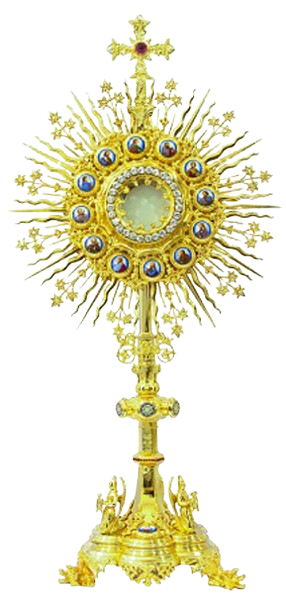
The Crisis of Our Time
Sometimes I wonder what the Angel of Peace would think if he entered many churches today. Perhaps he would not be surprised by the architecture. Nor by the music. Nor by the language of the liturgy. I think he would be astonished by something far more serious. He would be astonished at how easily we have lost our capacity for wonder. The deepest crisis of our age is not organisational. It is not even primarily a crisis of numbers or vocations. It is a crisis of the sense of the sacred. People no longer know how to stand in silent awe before God. They no longer know how to adore. They no longer know how to kneel. And when man ceases to kneel before God, he inevitably begins to kneel before something else. Before wealth. Before success. Before public opinion. Before ideology. Before his own ego. Every human being worships something. The only question is: Whom—or what—do we worship? That is why the Angel did not begin Fatima with a lecture. He began with adoration. Because wherever adoration disappears, faith slowly begins to disappear as well. Faith survives only where hearts continue to recognise the infinite holiness of God. And adoration is faith made visible.
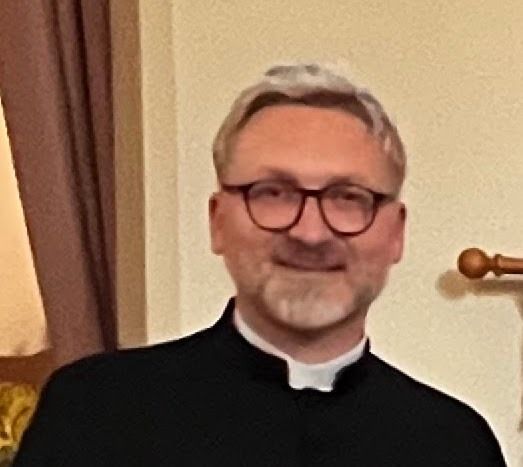
By Father Marcin Budzinski
A Catholic priest, born in Poznań, in western Poland, in 1980. A physicist and biologist by training, and a teacher by passion; he graduated from the Archdiocesan Seminary in 2012 and was ordained for the Archdiocese of Poznań; his main academic interests are the natural sciences and philosophy, on which he wrote his master’s thesis; he worked mainly in secondary schools with young people, whom he evangelised through theatre; his dream was to work abroad; for the past three years he has been working with the Polish Catholic Mission in England and Wales; he is dean of the north-western deanery of the Polish Catholic Mission and parish priest in Lancaster; he is deeply devoted to Our Lady of Fátima and to the devotion to Divine Mercy.