
The Call to Prayer
When the children finally arrived at the holm oak tree on that September day and began to pray the rosary, it was not long before Our Lady appeared before them. Her request to Lucia is like a heart-beat uniting all the apparitions:
“Continue to pray the Rosary in order to obtain the end of the war.”
Reflecting years later on the reason for this repeated call to prayer, Lucia wrote:
“Prayer is the basis of the spiritual life. If we give up praying, we deprive ourselves of that supernatural life which comes to us from the meeting of our soul with God, a meeting which comes about in prayer.” [Sister Lucia – “Calls” from the Message of Fatima, Chapter 16]
Prayer is the oxygen which enlivens our souls. Lucia writes of the need to persevere in prayer, to faithfully and fervently seek the God who is always waiting for us. It is we who distance ourselves from God through our wrong choices, including losing the hunger and desire for a daily life rooted in prayer. We can only truly be alive in our relationship with God when we come humbly and expectantly before him in regular prayer.
Furthermore, Lucia, reflecting on Our Lady’s words “in order to obtain the end of the war”, adds the following insight:
“Clearly, at the time, the Message was referring to the [first] world war which was afflicting so many people just then. But the word war also stands for many other wars going on all around us, which we must help to bring to an end by our prayer and self-sacrifice. I think, too, of the wars waged against us by the enemies of our eternal salvation: the devil, the world and our own carnal nature.” [Ibid]
We see so clearly in the Fatima story the undeniable presence of the devil seeking to obstruct and pervert God’s kingdom at every turn. In our own day, in both our war-scarred world bleeding from the senseless destruction of modern warfare, and in the battlefields of our own homes and hearts, we experience the attacks of the devil’s pride, envy and malice. Lucia speaks also of ‘the world’ – the society around us in which we can so powerfully experience God’s presence – but also a reality where we can be faced with so much temptation, distortion and distraction. Think, for example, of the fundamental struggle to know what ‘Truth’ is today in our increasingly digitalised and manipulated world. And yes, we all experience the daily conflicts of our own ‘carnal nature’ tempting us on deceptive paths leading us away from God.
The antidote to these “enemies of our eternal salvation” is answering God’s call to prayer. Prayer – medicine for the soul – can of course take so many forms and is something uniquely personal to each of us. Yet, at the same time, we are united in our Catholic tradition by particular pathways of prayer leading us to deeper communion with God, the Church and with each other, such as the Eucharist, Adoration and praying with the Word of God. All of these are central to the Fatima message, while the Rosary – personal and communal – is given particular prominence by Our Lady.
Why the Rosary? As St John Paul II so beautifully reminded us in his Encyclical Rosarium Virginis Mariae:
“With the Rosary, the Christian people sits at the school of Mary and is led to contemplate the beauty on the face of Christ and to experience the depths of his love. Through the Rosary the faithful receive abundant grace, as though from the very hands of the Mother of the Redeemer.” [RVM 1]
The Rosary is a path of prayer which guides us back to the heart of the Gospel, inviting us to bring key moments in the life of Jesus and Mary from the pages of Scripture into the ordinary realities of our own lives – trials, joys, doubts, hopes. The Rosary is a daily lifeline, leading us to a deeper experience of God’s love for us and for our world as revealed through Jesus and Mary. It is a spiritual weapon which keeps us close to God.
The Call to Simplicity
We see also so clearly in the three children how their prayer lives are rooted in the rich soil of an ever-greater simplicity of life. They let go of any forms of personal vanity, self-centredness and worldly ambition.
Instead, they dedicate themselves to living the mission entrusted to them by Our Lady in the realities of their daily crosses and duties – offering simple sacrifices with humility, gratitude and love for the salvation of sinners and reparation for offences against God. They make real Jesus’ Gospel teaching that profound spiritual gifts such obedience, service and total dependence on God are best lived through a childlike trust in God.
What changes do we need to make in our own daily lives so as to follow their example? What paths of distraction, selfishness and superficiality do we need to close down so that we too may also play our part in our shared mission to build God’s kingdom on earth?
A very fruitful spiritual exercise for this month would be to read/re-read St John Paul II’s Encyclical on the Rosary. A beautiful way to prepare for October, the month when we celebrate the Feast of Our Lady of the Rosary. See: https://www.vatican.va/content/john-paul-ii/en/apost_letters/2002/documents/hf_jp-ii_apl_20021016_rosarium-virginis-mariae.html
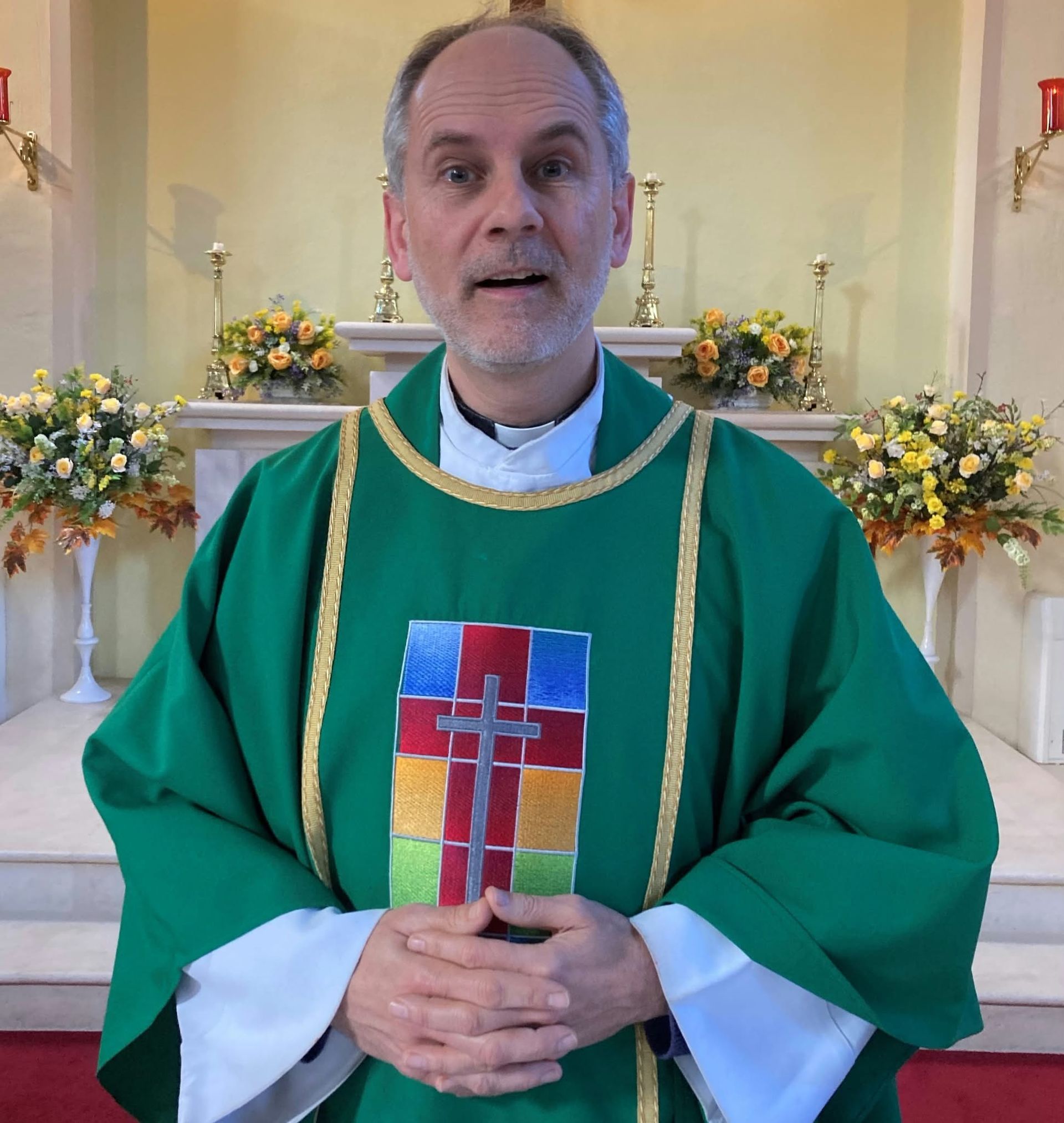
Fr Richard Nesbitt
A priest for the Westminster diocese since 2007. After serving as the Vocations Director for the diocese for a number of years, he has been parish priest of Our Lady of Fatima in White City West London since 2013. Father Nesbitt is currently the WAF Spiritual Director for the Diocese of Westminster.