
Feast of Our Lady of Mount Carmel
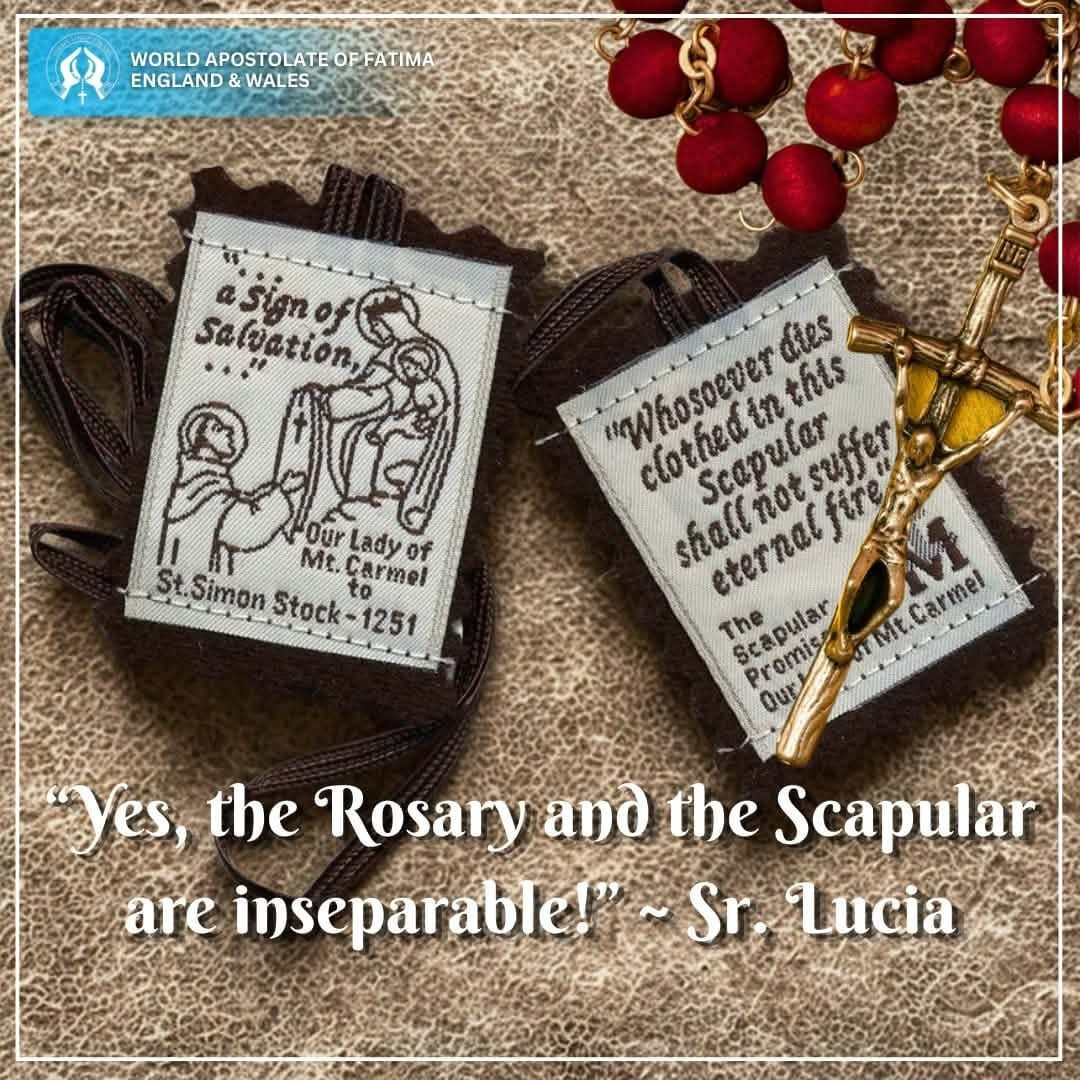
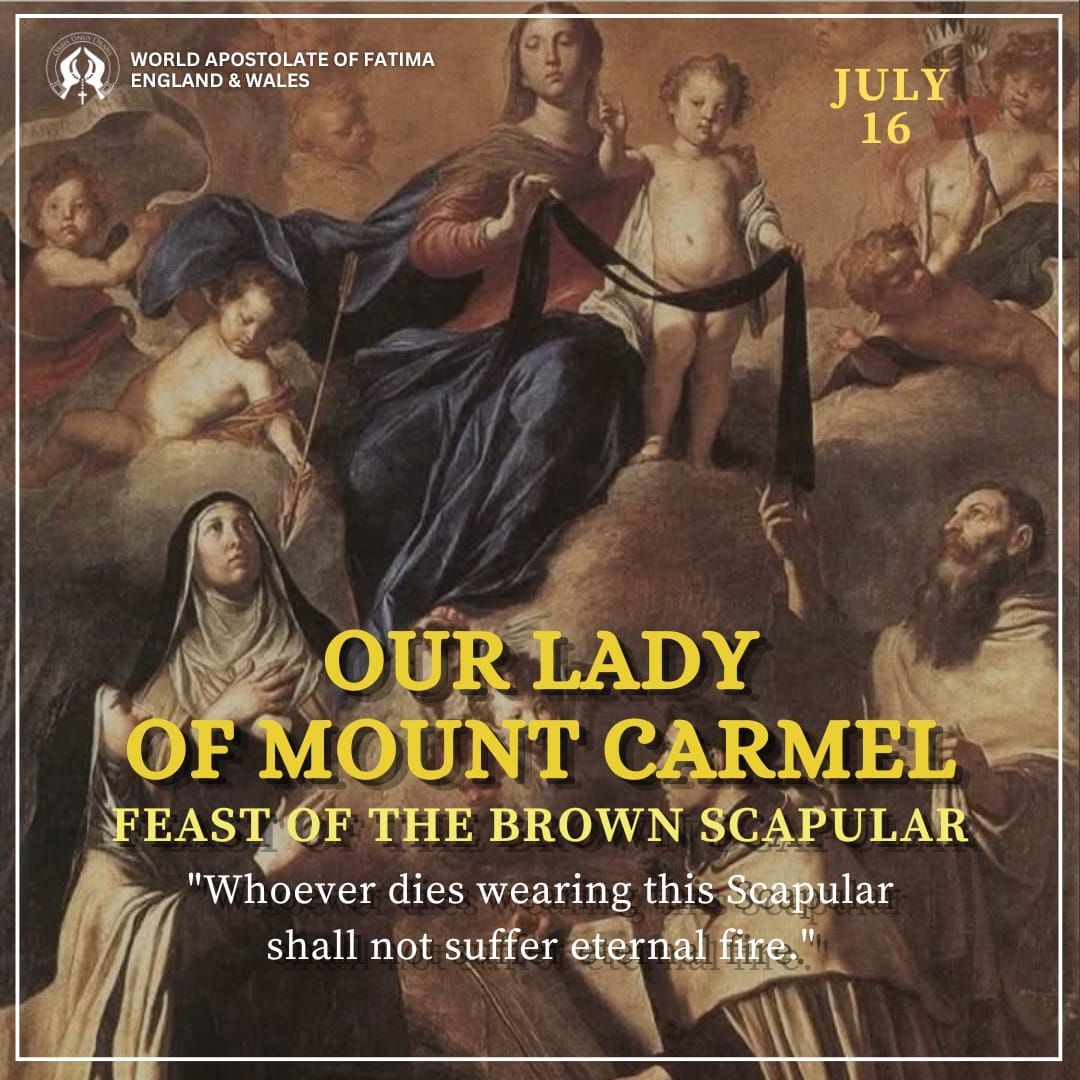
The Feast of Our Lady of Mount Carmel on July 16 draws us back to the earliest Christian hermits who settled on Mount Carmel in the Holy Land. Living in the spirit of the prophet Elijah, they dedicated themselves to a life of prayer and solitude under the protection of Mary, whom they honoured as their Lady. From this community grew the Carmelite Order and, in time, the Brown Scapular—a simple yet profound sign of belonging to Mary and committing one’s life to Christ through her guidance.
The Garment of Salvation: From Mount Carmel to the Message of Fatima
It is a story that spans nearly seven centuries, bridging the quiet slopes of Mount Carmel in Palestine, a desperate 13th-century monastery cell in Cambridge, and a sun-drenched field in 1917 Fatima, Portugal. For members of the World Apostolate of Fatima, the Brown Scapular is not simply a piece of cloth—it is our spiritual armour, a sign of our consecration, and an inseparable partner to the Holy Rosary.
A Heavenly Answer to a Desperate Prayer
The history of the Scapular is born out of crisis. Originally, the Carmelites were a group of hermits living in Palestine, striving to imitate the contemplative, fiery spirit of the Prophet Elijah. However, the Saracen invasions forced them to flee to Europe.
In the West, they found themselves completely uprooted, facing severe opposition from both within and outside the Church. By the mid-13th century, it seemed the Carmelite Order was doomed to fade into history.
Weighed down by this trial, the aging Prior General, Saint Simon Stock, retired to his cell in Cambridge, England. On July 16, 1251, he poured his heart out to the Virgin Mary, praying the beautiful Flos Carmeli ("Flower of Carmel") hymn.
Tradition tells us his cell was suddenly flooded with light. The Queen of Heaven descended, holding the capuche—the apron-like shoulder garment of the Carmelite habit. Handing it to him, she gave the Great Scapular Promise:
“Receive, my beloved son, this habit of your order... whosoever dies clothed in this shall never suffer eternal fire.”
As devotion exploded worldwide, this large monastic garment was eventually scaled down into the two small squares of brown wool we wear today, allowing laypeople to share in this extraordinary promise of maternal protection.