
Advent, Hope & The Holy Rosary – Two lamps of Hope
Fr Graham Ricketts
Two Lamps of Hope - Saints Francisco and Jacinta in the School of Our Lady of the Rosary
The Spiritualities of Saint Francisco & Saint Jacinta
Beatific Images
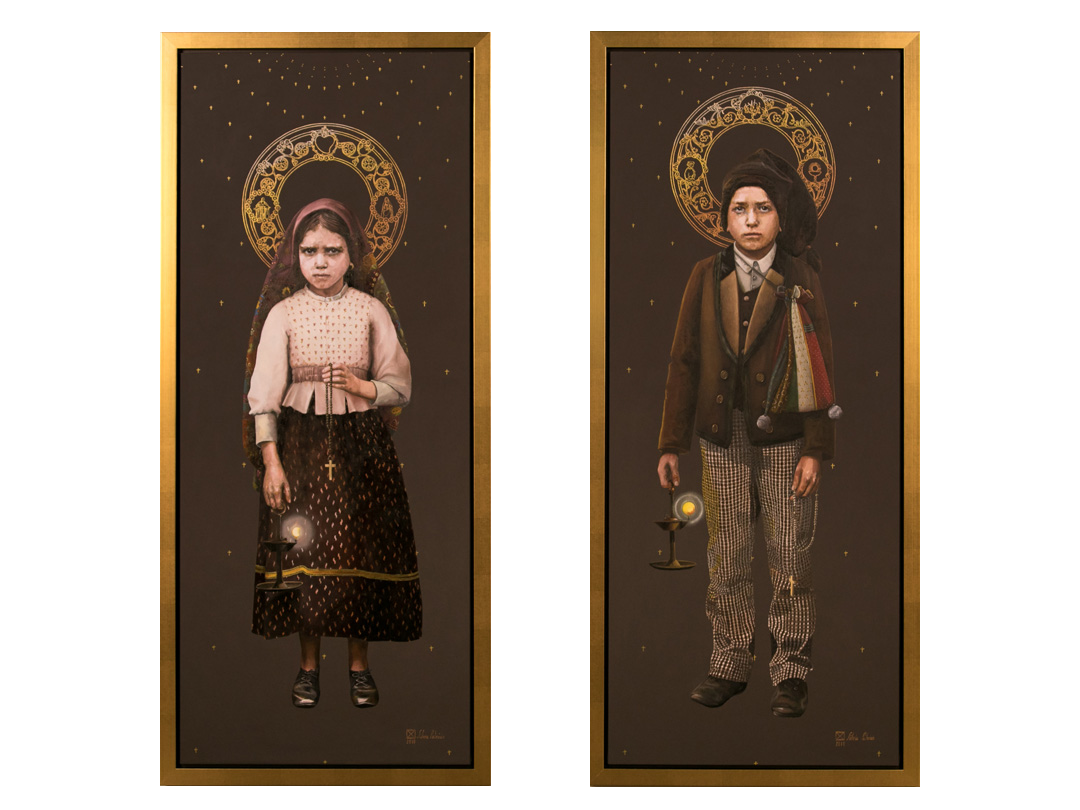
In the images[1] used for the canonisation of Saints Francisco and Jacinta, the Church highlights key themes of their spirituality. At first glance the images appear similar: both saints are shown with halos, holding lit lamps and rosaries in prayer, looking towards the viewer. Yet closer examination revealed by the artist show important differences.
The background is not a field of stars but a pattern of illuminated crosses flowing between earth and heaven, symbolising participation in the sacrifice of Christ. Jacinta’s gaze is direct and intense, reflecting her urgency for the conversion of sinners. Within her halo appear the Pope, the Virgin Mary, and the Immaculate Heart, while at the top is an image of her own heart offered in surrender. The lamp she carries represents the light of Christ[2] and the vigilance of the wise virgins[3]; its flame takes the shape of the moon, a symbol of her closeness to Our Lady[4].
Francisco’s image contains symbols linked to his own mission. His halo includes the Angel of Peace together with the Host and Chalice, recalling the children's Holy Communion from the angel. Centre top is the burning bush, symbolising the hidden holiness of God whom Francisco longed to console. Unlike Jacinta’s direct gaze, Francisco looks upward in contemplation. His lamp bears a flame shaped like the sun, the Lord’s lamp.
Together these images emphasise the principal and shared themes of their lives: Jacinta’s sacrifice and devotion to the Immaculate Heart of Mary, Francisco’s love for the Eucharist and adoration of the hidden Jesus, and for both, a life rooted in prayer, especially the Rosary.
Conversion
Conversion is foundational. Jacinta and Francisco were not always inclined to such devotion, nor did their transformation happen overnight. Their light-hearted nature changed dramatically after the angel’s visits in 1916, yet their conversion reached its fullness only through self-offering, suffering, prayer, and ultimately death.
The first appearance of the angel in the spring of 1916 profoundly affected their spiritual lives. Filled with grace and immersed in the divine presence, they became absorbed in a supernatural atmosphere where they scarcely seemed aware of themselves. The angel taught them a prayer which they repeated constantly:
“My God, I believe in Thee, I adore Thee, I hope in Thee and love Thee. I ask pardon for all those who do not believe in Thee, do not adore Thee, do not hope in Thee and do not love Thee.”
The following day they were still immersed in its joy, though its intensity gradually faded.
When the angel appeared again in the summer, they were found playing near their favourite well. Rebuking their lack of fervour, the angel urged them: “Pray, pray a great deal ... Offer unceasingly prayers and sacrifices to the Most High.” They were taught to make everything a sacrifice in reparation for sins and for the conversion of sinners.
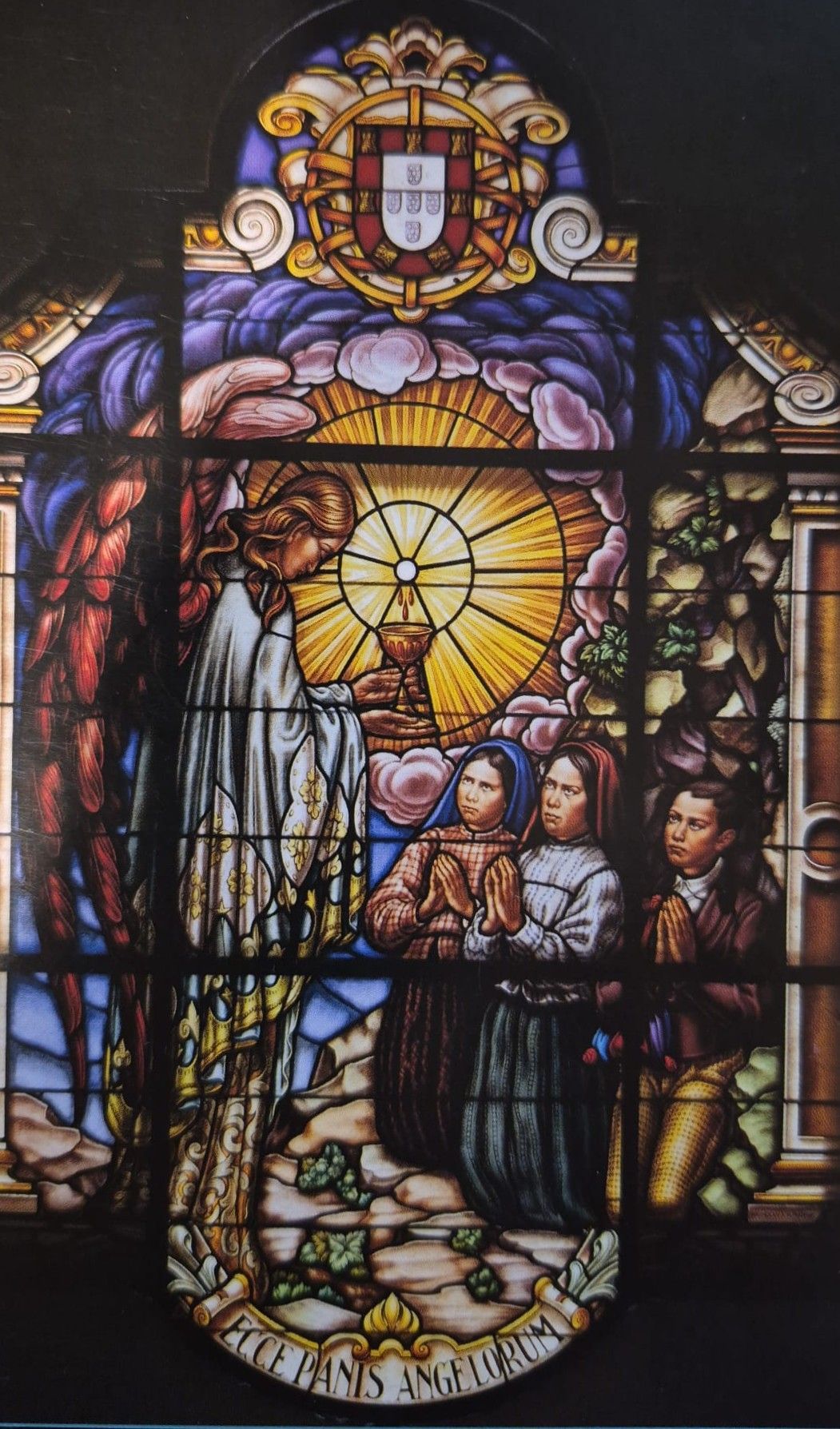
The angelic final visit came in the autumn when the children received Holy Communion from the angel. The purpose of this privilege was revealed in the dictated prayer : to unite their sacrifices to the sacrifice of Christ, offered through the Hearts of Jesus and Mary for the conversion of sinners. This catechesis prepared them for the deeper conversion that was still to come.
The apparitions of Our Lady brought a remarkable growth in infused knowledge. On three occasions, rays of light from her hands penetrated the hearts of the children, illuminating truths connected with her message.
The first followed their consent to offer themselves to God and suffer for sinners. Through this light they perceived the reality of heaven and the sustaining power of grace. Unlike the angel’s earlier visit, where they seemed to lose awareness of themselves, here they discovered themselves in God. They saw their true identity and vocation within the divine presence.
The second occasion came when the children requested healing for a sick friend. Our Lady emphasised the need for conversion, while the rays consoled Lucia in the face of her separation from her cousins and her mission of promoting the Immaculate Heart of Mary for the reparation for sin.
The third occurred in July with the vision of hell and the Secret. Terrified by what they saw, the children nevertheless received the remedy: prayer, the daily Rosary, sacrifices, Holy Communion of Reparation (FFS), and suffering offered for the Holy Father. From then on, their lives became a witness to sacrifice and reparation.
Francisco became devoted to consoling the “hidden Jesus” in the tabernacle. Moved by the sadness of Jesus caused by sin, he spent long hours in adoration and willingly offered his sufferings[5]. Jacinta likewise embraced sacrifice for the conversion of sinners[6]. Childhood frivolity gave way to a determination not to waste a moment.
To Choose: To Obey or Disobey
Conversion requires free consent. For that reason, Our Lady made clear from the beginning what their “yes” would entail: suffering, perseverance, and an early death.
Francisco remained faithful to that consent until his death[7]. Jacinta, was offered a further choice: to die sooner or remain longer to suffer for the conversion of sinners. She chose the latter sacrifice and endured her final illness without complaint[8].
Their fidelity was also tested by authority. When civil officials imprisoned and threatened the children to stop the apparitions, they chose obedience to God rather than to men. Their conversion was expressed not simply in words but in courageous decisions.
Hidden
Before leaving for hospital, Jacinta told Lucia: “When you are to speak of this, don't go and hide.”[9] Yet hiddenness remained central to the spirituality of both children. They desired to be unnoticed by the world and known only to Jesus and Mary. Having seen themselves in God through the light of Our Lady, they sought to remain hidden within the Sacred Heart of Jesus and the Immaculate Heart of Mary.
Francisco spent countless hours hidden before the tabernacle with the hidden Jesus. Jacinta completed her final suffering hidden in a hospital ward. In silence, solitude, and suffering borne without complaint, they found peace and entered more deeply into the mystery of the Cross.
They were not without struggle or human weakness. Yet their enduring consent to God’s will, and their continual conversion, became the hallmark of their heroic sanctity.
The Spiritual Mandate
Saints Jacinta and Francisco did not seek holiness for themselves, nor can their spirituality be reduced to recited prayer alone. Their gift was the total surrender of their lives to the will of God, offered to console Jesus and Mary and to share in the work of salvation.
This remains the calling of every baptised Christian and is at the heart of the message of Fatima and the WAF. Their lives remind us that one person’s response to Christ can make an eternal difference. There is something of Jacinta and Francisco in each of us.
Their spiritual mandate remains our own: to believe, to choose Christ daily, to repent and be converted, and to remain hidden until called to witness by Mary. In short, it is to believe, adore, hope, and love Jesus, especially present in the Holy Eucharist, and to pray for those who do not yet believe, adore, hope, or love Him[10].
An Advent Prayer
‘Our Lady of the Rosary, teach us to wait with hope, to pray with faith, and to carry the light of your Son into the world. Saints Francisco and Jacinta, pray for us.’
Ave Maria
Adapted from a reflection by Fr Graham Ricketts for WAF England & Wales
Rev. Fr Graham Ricketts is a Catholic priest of the Diocese of Arundel and Brighton and Parish Priest of Our Lady Queen of Peace, Adur Valley, West Sussex. He also serves as the Spiritual Director of the World Apostolate of Fatima for the Diocese of Arundel and Brighton. He has a particular interest in Marian spirituality and the message of Fatima, especially the devotion to the Immaculate Heart of Mary, the Holy Rosary and the call to prayer, conversion and reparation. Through his priestly ministry and spiritual guidance, he encourages the faithful to deepen their relationship with Christ through the maternal guidance of Our Lady.
[1] https://pastorinhos.com/en/foundation/about-us/canonization/two-lamps/
[2] John 8.12
[3] Matthew 25.1-13
[4] Lumen Gentium 1.1 and Chapter VIII ff
[5] Romans 12.1 “"I appeal to you therefore, brothers, by the mercies of God, to present your bodies as a living sacrifice, holy and acceptable to God, which is your spiritual worship." (ESV)
[6] Colossians 1:24 "Now I rejoice in my sufferings for your sake, and in my flesh I am filling up what is lacking in Christ's afflictions for the sake of his body, that is, the church" (ESV)
[7] 4 April 1919
[8] Jacinta died on 20 February 1920
[9] Fatima in Lucia’s Own Words, vol I, 2007
[10] cf Prayer given by the angel of Portugal in the Spring of 1916