
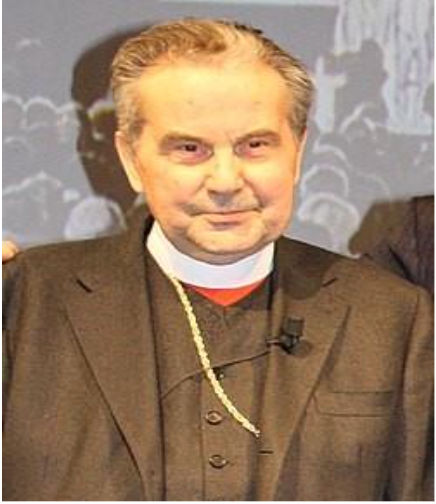
Picture of Cardinal Carlo Caffarra
THE FINAL BATTLE: Why the Message of Fatima is a Survival Guide for the Modern Family
Patrick Cunningham
THE FINAL BATTLE: Why the Message of Fatima is a Survival Guide for the Modern Family?
FATIMA, Portugal — For over a century, the apparitions of Our Lady of Fatima have been scrutinized by theologians, historians, and the faithful. The 1917 events are famous for their prophetic warnings, calling humanity back to God and Holiness by following heavens peace plan. However, buried within the memoirs of Sister Lucia dos Santos—the longest-living seer of Fatima—lies a less publicized theme for the 21st century: a divine battle plan for the preservation of the family.
From the terrifying climax of the Miracle of the Sun to the intimate details of Sister Lucia’s childhood home found in her second volume of memoirs, the message of Fatima suggests that the "final battle" between good and evil will not be fought on a battlefield, but in the living room.
The Forgotten Vision of October 13
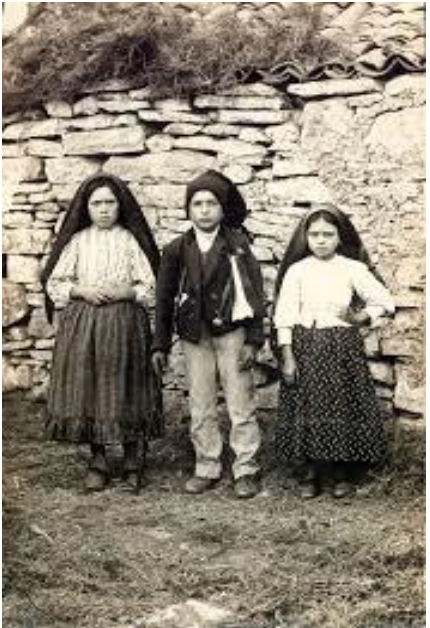
Most accounts of October 13, 1917, focus on the "Miracle of the Sun," where 70,000 people witnessed the sun dancing and plunging toward the earth. This terrifying display was a public validation of the children's claims. However, while the crowd looked on in fear, the three shepherd children—Lucia, Jacinta, and Francisco—were granted a private, beatific vision that serves as the theological key to the entire message.
As the sun resumed its place in the sky, the heavens opened. In her Memoirs, Sister Lucia describes the scene:
"We saw Saint Joseph with the Child Jesus and Our Lady robed in white with a blue mantle, beside the sun. Saint Joseph and the Child Jesus appeared to bless the world, for they traced the Sign of the Cross with their hands."
The appearance of the Holy Family at the climax of the apparitions was not merely decorative. Theologically, it was a declaration. By presenting St. Joseph holding the Christ Child and blessing the world together, Heaven was emphasizing the father's crucial role in the spiritual protection of the family.
In a world that would soon see the disintegration of family structures through war and secularization, God presented the Holy Family of Nazareth as the ultimate remedy. The vision suggests that peace—symbolized by the calming of the sun—will only return to the world when Christ reigns within the "domestic church."
Roots of Sanctity: Inside the Santos Home
To understand the type of family God desires, one need not look further than the family He chose to receive the message. In Fatima in Lucia’s Own Words, Volume II, Sister Lucia pulls back the veil on her parents, Antonio and Maria Rosa dos Santos, offering a masterclass in parenting.
Contrary to some historical caricatures that paint her father as merely a sceptic or a drinker, Lucia’s fifth and sixth memoirs reveal a home rooted in deep, imperfect, human love. She recounts touching anecdotes of her father, Antonio, whom she describes with great affection. In one instance, seeing his wife overwhelmed with work, Antonio clumsily attempted to help her spin wool. Though he failed at the task, Lucia recalls her mother’s tender reaction, embracing him and saying, "What a good man you are!"
Lucia paints her mother, Maria Rosa, as the spiritual anchor of the parish—a woman who refused to let her children merely parrot prayers. She insisted on a "lived faith," creating an atmosphere where the supernatural was a natural part of daily conversation.
However, Volume II also serves as a reality check: holiness does not grant immunity from suffering. Lucia heartbreakingly details how the apparitions shattered the peace of their home. Under the pressure of constant interrogations and accusing neighbours, her mother once lamented, "My God, where has all the joy of our home gone?"
This inclusion in the memoirs is vital. It demonstrates that the "Fatima family" is not one of plastic perfection, but one that perseveres in faith even when the joy seems to have vanished.
The Prophecy of the Final Battle
Decades after the apparitions, Sister Lucia’s warnings about the family turned from reflective to prophetic. In the early 1980s, she corresponded with Cardinal Carlo Caffarra, who had been tasked by Pope John Paul II with establishing the Pontifical Institute for Studies on Marriage and Family. When the Cardinal wrote to the nun asking for prayers, he received a handwritten reply that contained a chilling prophecy:
"The final battle between the Lord and the reign of Satan will be about marriage and the family. Don't be afraid, because anyone who works for the sanctity of marriage and the family will always be fought and opposed in every way, because this is the decisive issue."
She added a note of triumph: "However, Our Lady has already crushed his head."
This statement, which has gained immense traction in recent years, frames the current cultural confusion regarding marriage, gender, and parenting not as sociological shifts, but as spiritual warfare. Sister Lucia viewed the family as the "primary cell" of the Church; if the cell is corrupted, the body dies.
The Weapon for the Home: The Rosary
In her book Calls from the Message of Fatima, Sister Lucia provides the practical strategy for winning this battle. She argues that God, foreseeing the busyness and "materialization" of the modern family, provided a prayer accessible to all: the Rosary.
She writes that the Rosary is the "spiritual bread" that must be broken daily in the home. It is the means by which the family learns from the School of Mary.
"There is no problem, I tell you, no matter how difficult it is, that we cannot resolve by the prayer of the Holy Rosary," Lucia famously stated.
She cautioned that a home without prayer is like a garden without water—eventually, it ceases to produce the "rosebuds" of virtue. The daily recitation of the Rosary creates a protective buffer against what she termed the "diabolical disorientation" of the world.
A Call to Action
The message of Fatima, spanning from the humble kitchen of the Santos family to the solar miracle of 1917, is a coherent plea for the restoration of the family.
The vision of St. Joseph blessing the world remains a standing invitation: for fathers to bless their children, for mothers to catechize with love, and for families to kneel together against the encroaching darkness. As Sister Lucia’s writings make clear, the victory of the Immaculate Heart of Mary will not be achieved by international treaties, but by the quiet, faithful witness of families praying in their living rooms.