
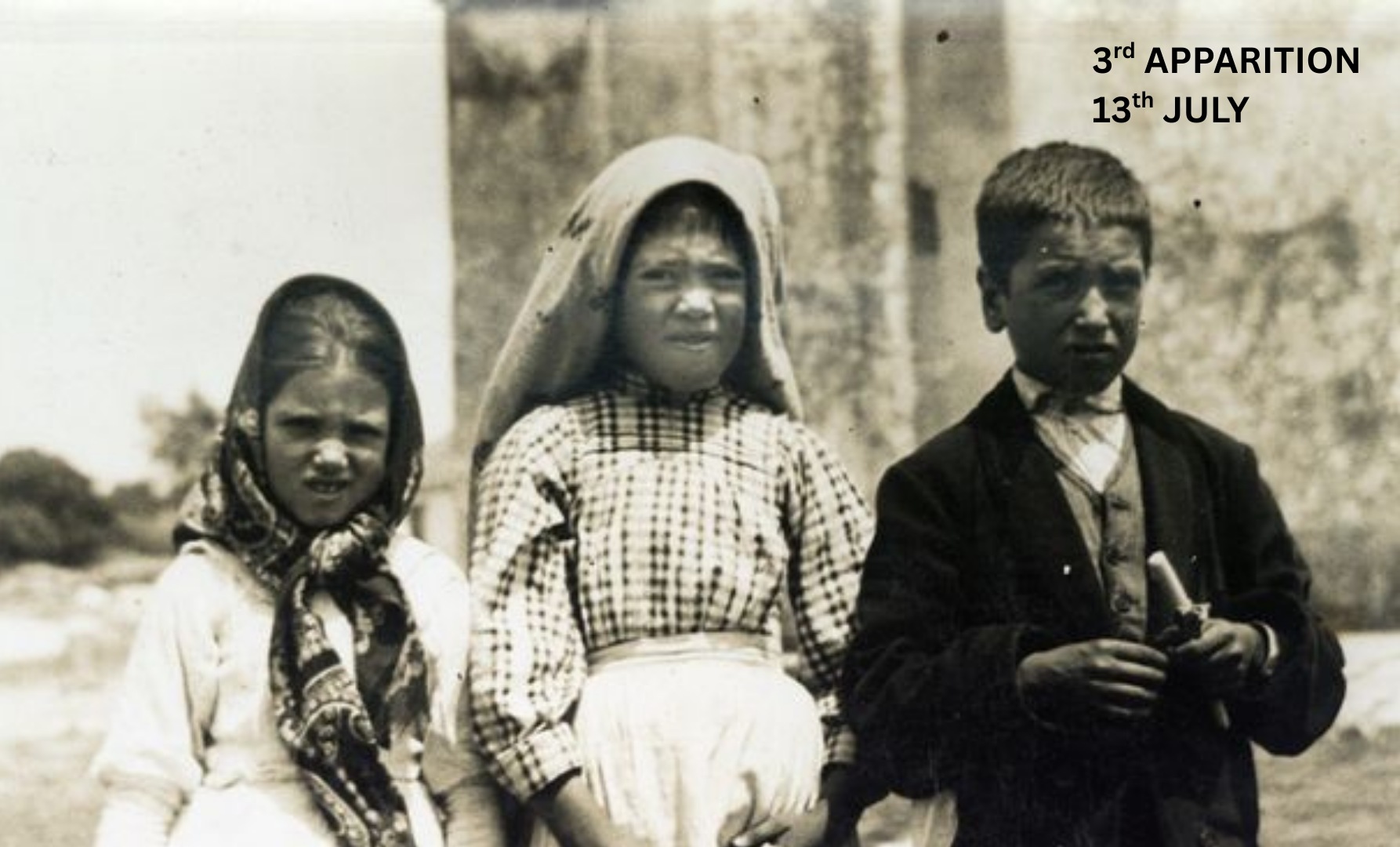
The events of July 13, 1917, stand as a spiritual crossroads for the modern world. On that day, three young shepherd children in Portugal were shown the First Secret of Fatima: a terrifying vision of the hell. While many fixate on the imagery of the "sea of fire," the authentic message revealed by Sister Lúcia dos Santos is not one of fear, but of urgent, loving action. It is a call to Reparation.
The Lost Sense of Sin
In her memoirs, Sister Lúcia noted that the children—Lúcia, Francisco, and Jacinta—were the first to live the Fatima message. Despite their innocence and their simple lives in Aljustrel, far removed from the digital noise of today, they grasped the enormity of sin. They understood that sin is an infinite offense against an Almighty God.
Today, we face a crisis: the loss of the "sense of sin." This is why reparation has become unpopular and why confessional lines have thinned. When we no longer see sin in ourselves or our culture, we no longer see the need to make amends. We may even treat the Fatima prayer—“especially those most in need of Thy mercy”—as a petition for "others," falling into the Pharisaic trap of looking down on the world while neglecting our own spiritual poverty.
Understanding Reparation: Healing the Heart of God
A common question arises: How can an omnipotent God be "hurt" by our actions? The answer lies in the distinction between God’s Intrinsic and Extrinsic Glory.
- Intrinsic Glory is God’s inherent perfection, which no creature can increase or diminish.
- Extrinsic Glory is the manifestation of God’s light in the created world.
When we sin, we commit an injustice. We "steal" from God’s extrinsic glory by refusing to live according to His creative plan. St. Irenaeus famously said, "The glory of God is man fully alive." When we sin, we are not fully alive; we dim the light of God that should shine through us. Reparation is the act of "making it better"—restoring the justice due to God and consoling the Hearts of Jesus and Mary because they loved us first. It is the spiritual equivalent of tending to a loved one who has been injured.
The Five First Saturdays: A Perpetual Devotion
To facilitate this reparation, Our Lady requested the Five First Saturdays devotion. She promised to "assist at the hour of death with the graces necessary for salvation" all those who, on the first Saturday of five consecutive months, fulfil four conditions: sacramental confession, Holy Communion, reciting the Rosary, and a 15-minute meditation on the mysteries.
However, true love does not stop at a checklist. While the "Five" Saturdays correspond to the five specific blasphemies against Mary’s Immaculate Heart, we should desire to carry this devotion on month by month. If we love someone, we do not stop comforting them simply because we met a minimum requirement. Every First Saturday should be seen as a "monthly appointment" with our Mother to intercede for the world.
A Call to Action
The message of Fatima is a call from the Mother of God for a renewed fidelity to penance and prayer and continual conversion of heart. She tells us to live the Gospel—to always, “do whatever he tells you” (John 2:5). The Fatima message exemplifies Our Lord’s desire that his Mother be better known, loved, and venerated through the devotion to her Immaculate Heart.
As we celebrate the centenary of the First Saturday request (December 10, 2025), the call to action is more urgent than ever. The shepherd children practiced reparation before the age of Netflix, TikTok, and Instagram—tools that today often lead us away from God. We are called to follow their example by embracing the "sacrifice of daily duty."
Each one of us is offered that same invitation and St. Paul tells us the reason for our positive response - for what is lacking in the body of the Church.
As members of the WAF we can help save the church, the Body of Christ only if every member embraces the invitation to make reparation. There will, as a result be a period of Peace as promised by Our Lady at Fatima. This is the fruit of reparation for after suffering (daily duty) comes peace, after Good Friday comes the Peace of Easter. Reparation is the primary intention for the first Saturday devotion and serves to proclaim and restore the justice due to God.
Practical Steps Forward
To live this message today:
- Mark the Calendar: Treat every First Saturday as a sacred commitment.
- Sacrifice the Ordinary: Offer the trials of daily life as a constant morning offering for the conversion of sinners.
- Spread the Devotion: Do not be afraid to invite others or ask your parish priest to facilitate the First Saturday devotion.
- Know that you are doing something to bring about the peace in the world and console the Immaculate Heart of Mary.
By making amends through reparation, we restore God’s glory in a darkened world and participate in the redemptive work of Christ.
Article written by Patrick Cunningham 3. Jan. 2026
Based upon Canon Jason Jones talk on reparation at WAF-E&W AGM 2024.