
Walsingham, the Annunciation, and Mary’s Dowry: A Marian Vocation for England and Wales
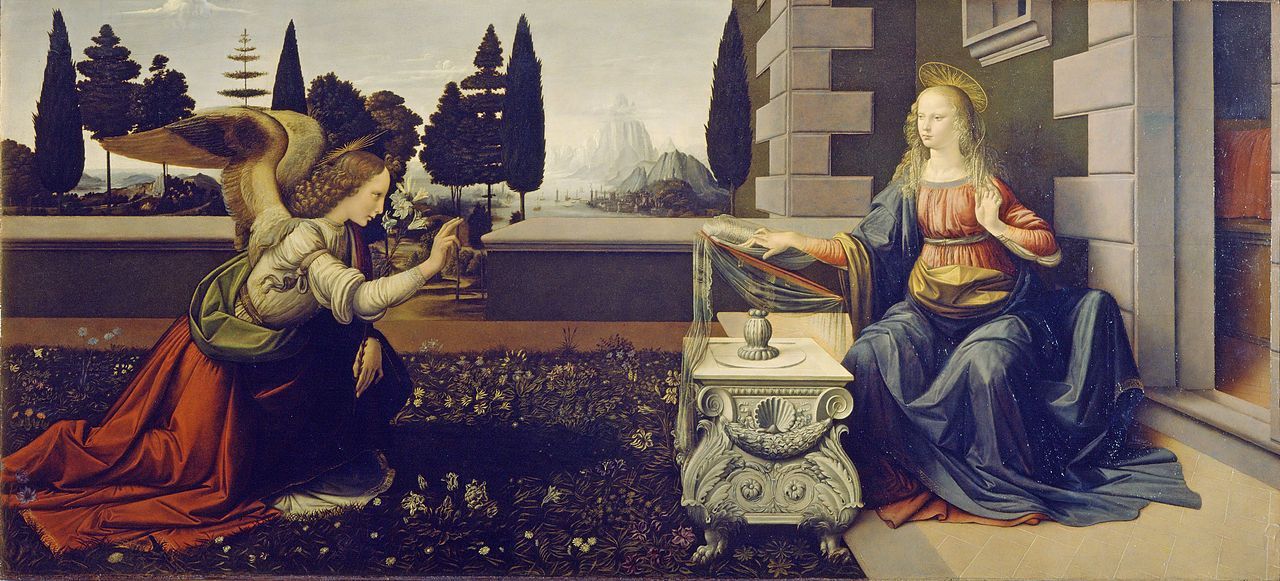
The story of Walsingham begins in 1061, when the Blessed Virgin Mary appeared to Richeldis de Faverches, a noblewoman living in Norfolk. In a vision, the Blessed Mother showed her the humble house of Nazareth, the place where the Archangel Gabriel announced God’s plan and where Mary freely gave her yes to become the Mother of Our Lord and Saviour, Jesus Christ. This moment, known as the Annunciation, marks the beginning of the Incarnation.
The Blessed Mother asked Richeldis to build a copy of that Holy House in Walsingham, England, a place where people could remember and reflect on Mary’s joy at the Annunciation and its meaning. She promised that those who came there would find comfort and hope. From the beginning, Walsingham was meant to be a living reminder that God comes to humanity through humility, trust, and obedience.
At the centre of Walsingham’s mission is the truth revealed in the Annunciation. God does not force his will on humanity; he waits for a free response. Our Lady’s obedience allowed the eternal Word to take flesh, changing the course of history. Walsingham continually calls England back to this truth: that spiritual renewal begins when people listen to God and place their trust in his will rather than in their own power.
From 1153, the shrine was entrusted to the Augustinian Canons Regular, who cared for it until its destruction in 1538. For almost four centuries, they protected the Holy House and ensured that Walsingham remained centred on prayer, worship, and the sacraments. By the thirteenth century, it was known as England’s Nazareth.
In 1347, Elizabeth de Burgh, Lady of Clare and granddaughter of Edward I, founded a Franciscan friary nearby. Inspired by St Francis of Assisi, the Franciscans focused on pastoral care. They preached, heard confessions, offered spiritual guidance and gave poor and exhausted pilgrims free accommodation. Pilgrimage became not only a physical journey but also a call to repentance and inner renewal.
Medieval pilgrims walked to Walsingham from all parts of England and travelled from the Continent of Europe, seeking Mary’s intercession. Kings were among them. Henry III came on pilgrimage eleven times from 1226 until he died in 1272, and he gave a gold crown for Our Lady’s statue. His son, Edward I, came no fewer than twelve times. The troubled Edward II made pilgrimages in 1315 and in 1326 not long before his death. Young Edward III first came on his accession aged sixteen and on at least seven other occasions, some with his wife, Queen Philippa. It was in his reign that the title ‘Dowry of Mary’ became very popular as a title for England. A dowry is a gift freely given and entrusted to another so that it may grow and bear fruit. To call England Mary’s Dowry means that the nation belongs to Mary, who entrusts it to be well-governed so that Christ might be more fully present in its people and culture. This devotion did not distract from Christ but supported faith in him, since Mary’s role is always to lead others to her Son.
Henry IV, very sick, made a pilgrimage in 1406; and his son, Henry V, brought his new Queen, Catherine, in 1421. Their son, Henry VI, came in 1449, and his wife Margaret, still childless after eight years of marriage, came to plead for a child; her prayer was granted. The next pilgrim king was Edward IV in 1466 and 1472, before the throne was seized by Henry Tudor in 1485, who came to pray to be ‘preserved from the wiles of his enemies.’ He came again in 1505, bringing with him his four-year-old son, the future Henry VIII, who succeeded to the throne in 1509, the year he married Katherine of Aragon.
Henry VIII came to Walsingham and walked barefoot the last few miles to pray she would give him an heir. She gave birth to Prince Henry on New Year’s Day, 1511; he set off to give thanks to Our Lady of Walsingham and spent a week there. Tragically, Prince Henry died within two months, and this marked the beginning of Henry’s anguish. After Katherine suffered many miscarriages, the Pope refused to grant him a Decree of Nullity in order to marry Anne Boleyn.
In 1538, Henry turned his fury on the Pope, making himself the ‘Head of the (Anglican) Church’. The Shrine was destroyed, the Holy House was burnt down, the statue of Our Lady was thrown on a bonfire, the Augustinians were expelled, the Franciscan friary was closed, and the monasteries and convents of England were demolished. England’s Nazareth fell silent. Yet the spiritual gift was not lost; it survived quietly in the hearts of the faithful.
The restoration of Walsingham began centuries later. In 1897, Charlotte Pearson Boyd restored the Slipper Chapel to Catholic worship. In 1934, Cardinal Francis Bourne declared it the National Shrine of Our Lady of Walsingham for Catholics in England and Wales. After nearly four hundred years, public pilgrimage returned.
Today, the Catholic National Shrine and Basilica of Our Lady of Walsingham once again stands as a place where the mystery of the Annunciation is remembered. In a world marked by uncertainty and division, Walsingham offers a lasting message: God still seeks a place among humanity, and he still waits for a free and loving yes. Mary’s mission for England and Wales has not changed. Echoing the message of Fatima, she continues to call people to prayer, penance, sacrifice, repentance, devotion to the Rosary, and trust in God’s mercy. To speak of Mary’s Dowry today means remembering both the gift that was given and the responsibility that comes with it. England will be renewed not by force or by looking only to the past, but by learning again to listen, to trust God, and to welcome Jesus into the heart of the nation.
Fr Sunday Baba Ikpe, OSA